

Case Study · 2.5 min read
Fit Pals
Synchronized Remote Workout Companion
FitPals enables users to work out together remotely by synchronizing workout video playback and integrating real-time partner video chat using React, TypeScript, Convex, and Twilio Video.
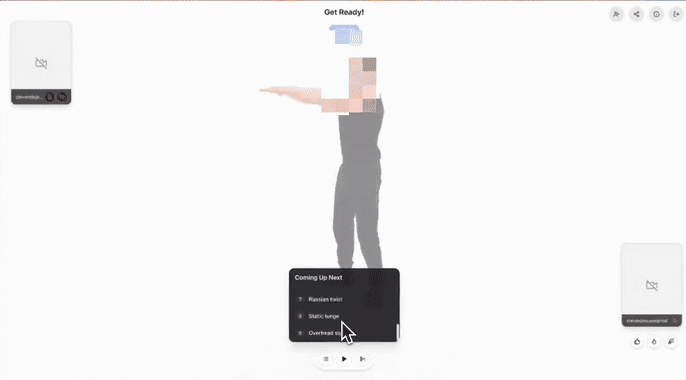
Project Overview:
FitPals is a web application designed to combat the isolation of remote workouts by creating a shared, interactive fitness experience. Built with React, TypeScript, and Convex for backend/state management, it allows two users to watch instructor led workout videos simultaneously while interacting via integrated real time video chat, powered by Twilio Video. This project demonstrates expertise in building real time, collaborative applications, managing complex state synchronization, and integrating third party video communication APIs.
Goals & Objectives:
The primary goal was to enable friends or workout partners to exercise together remotely, mimicking the experience of being in the same room. Key technical objectives included: implementing robust synchronization logic to ensure workout videos play concurrently across different clients, integrating Twilio Video for seamless peer to peer video chat, utilizing Convex for real time database updates and backend functions to manage session state, and building an intuitive user interface with React and TypeScript for controlling video playback and managing the chat interface.
Approach & Process:
- Requirements & Design (Concept & Architecture): Identified the need for a shared remote workout experience. Defined core features: synchronized video playback and integrated video chat. Architected the application using React/TypeScript for the frontend and Convex for the real time backend and state synchronization. Planned the integration points for Twilio Video SDK. Designed the UI flow for session creation, joining, and the in workout experience.
- Development (Real time Implementation): Focused on implementing the core real time features. Developed the video synchronization mechanism using Convex's real time capabilities to manage playback state (play, pause, seek) across connected users. Integrated the Twilio Video SDK to establish peer to peer video connections and display partner video streams within the React UI. Built frontend components for video player control and chat interface using React and TypeScript.
- Testing & Iteration (Synchronization & UX): Conducted thorough testing focused on the reliability of video synchronization under various network conditions. Tested the video chat quality and stability. Gathered user feedback on the overall experience, particularly the ease of starting and participating in a shared workout session. Iterated on the synchronization logic and UI based on testing results.
- Launch & Maintenance (Deployment): Deployed the application to a suitable hosting platform (e.g., Vercel, Netlify). Manage ongoing maintenance, potentially including dependency updates and monitoring API usage for Twilio and Convex.
Outcome & Impact:
FitPals successfully demonstrates the ability to build complex, real time applications addressing a unique user need. It showcases proficiency in modern frontend technologies (React, TypeScript), real time backend/database solutions (Convex), and third party API integration (Twilio Video). The project serves as a strong portfolio piece highlighting skills in synchronization logic, state management in collaborative environments, and building engaging user experiences, relevant for roles requiring full stack development with a focus on real time features.