

Case Study · 1.5 min read
Who's That Pokémon?
Who's That Pokémon? is a fun, interactive web game built with React, inspired by the iconic guessing game. This passion project showcases game development skills and crafting engaging, nostalgic user experiences.
whothatpokemon.com ↗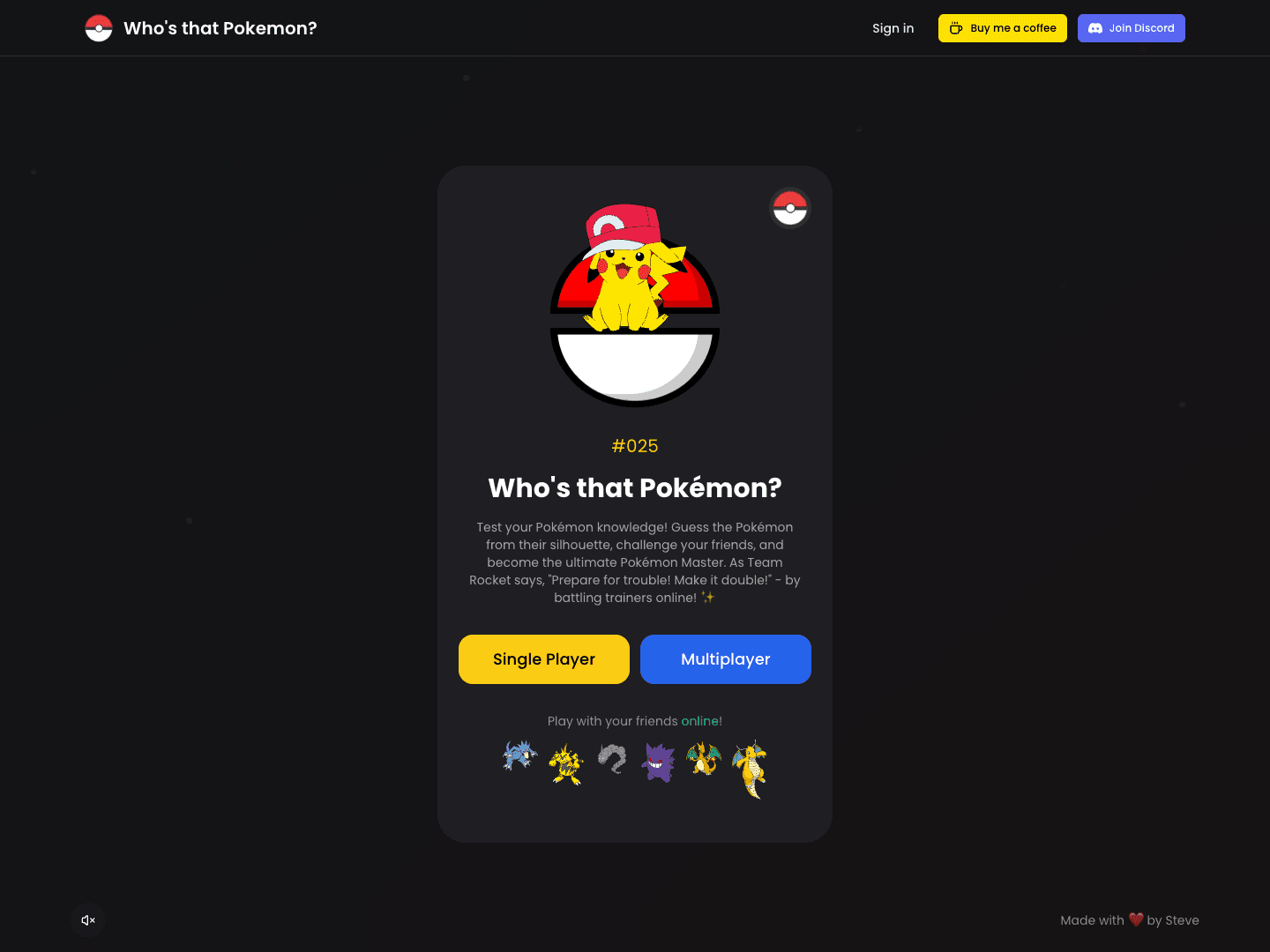
Project Overview:
Who’s That Pokémon? is an interactive and nostalgic web game designed as a passion project to bring the classic silhouette guessing challenge to fans online. Built entirely with React, this project highlights skills in frontend development, game logic implementation, state management, and creating engaging user experiences. The application features a clean, responsive design ensuring enjoyable gameplay across all devices, capturing the fun of the original while demonstrating modern web development techniques.
Goals & Objectives:
The primary goal was to create an entertaining and visually appealing web based game that serves as both a tribute to the Pokémon franchise and a practical application of React development skills. Key objectives included implementing core game mechanics (silhouette display, guessing input, scoring), fetching and managing Pokémon data efficiently, ensuring a fully responsive layout for various screen sizes, and deploying a polished, functional application accessible via a public URL.
Approach & Process:
- Requirements & Design (Concept Development): Defined the core gameplay loop based on the original "Who's That?" segment. Brainstormed features like scoring and hints. Designed a simple, captivating user flow and established a visual style echoing the Pokémon theme using modern design principles.
- Development (Design/Development Phase): Developed the single page application using React. Focused on creating dynamic UI components for displaying silhouettes, handling user input, and providing feedback. Implemented game logic for selecting random Pokémon, checking user guesses against fetched data (e.g., from PokéAPI or a custom dataset), managing game state (score, hints used), and ensuring smooth transitions.
- Testing & Iteration (Testing & Feedback): Conducted testing across different browsers and devices to ensure responsiveness and consistent performance. Gathered feedback from friends or peers to identify usability issues or areas for improvement, iterating on the design and game logic accordingly.
- Launch & Maintenance (Launch & Ongoing Maintenance): Deployed the application to a web host (e.g., Vercel, Netlify). Manage ongoing maintenance, potentially including adding new Pokémon generations or features based on personal interest or user feedback.
Outcome & Impact:
Successfully launched as a personal project, "Who's That Pokémon?" serves as a practical demonstration of React development capabilities, API integration, and frontend game logic implementation. The project achieved its goal of creating a fun, functional, and nostalgic web game, providing a tangible example of passion translating into a polished application. It effectively showcases skills relevant to frontend or full stack development roles.