

Case Study · 2.5 min read
Midtown Tech
Interactive Coding Education Platform
Midtown Tech is an interactive web development learning platform featuring a custom-built, browser-based IDE with real-time code execution, preview, and cloud saving capabilities, built using Next.js.
learn.midtown.technology ↗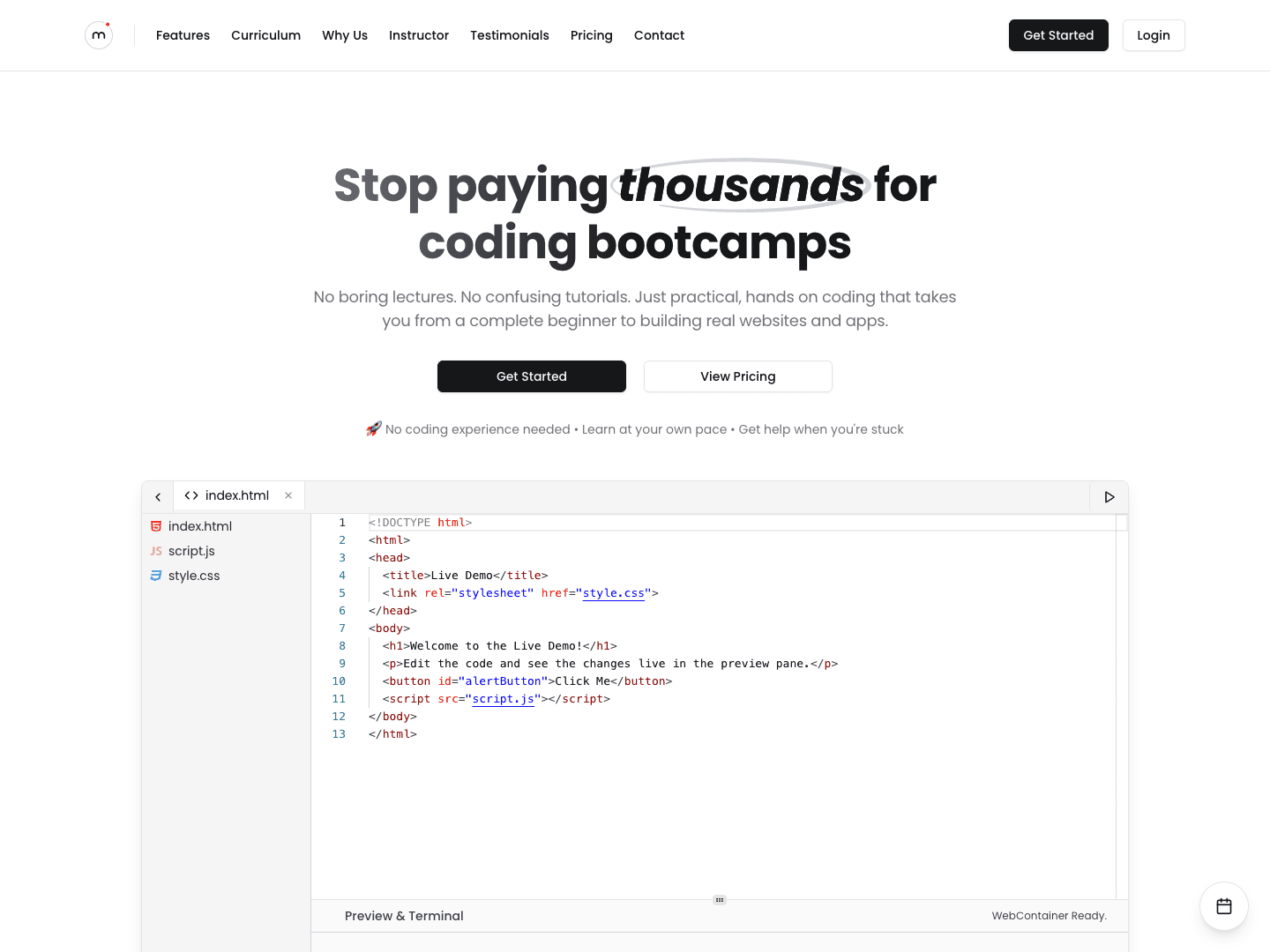
Project Overview:
Midtown Tech is an advanced web-based learning platform designed to teach programming and web development concepts (HTML, CSS, JavaScript, React) through hands-on experience. Built with Next.js (React/TypeScript), its standout feature is a fully integrated, browser-based Integrated Development Environment (IDE). This custom IDE provides students with real-time code execution (leveraging technologies like WebContainers), live previews, terminal access, and the ability to save their code progress to the cloud, creating a seamless and powerful learning environment directly within the browser.
Goals & Objectives:
The primary goal was to create a highly interactive and effective online learning experience that goes beyond traditional video tutorials by enabling students to write, run, and debug code directly within the lesson context. Key technical objectives included: engineering a secure and performant browser-based IDE capable of running web technologies, implementing real-time code execution and preview capabilities, developing a system for saving student code and progress in the cloud, structuring comprehensive course content (lessons, modules), and building an intuitive user interface for navigating lessons and interacting with the IDE.
Approach & Process:
- Requirements & Design (Concept & Architecture): Defined the core requirements for an interactive learning platform centered around a browser-based IDE. Researched technologies (like WebContainers) for sandboxed code execution. Architected the platform using Next.js, planning the integration between course content delivery, the IDE components, and backend services for code persistence and user management. Designed the user interface for lessons, code editor, preview pane, and terminal.
- Development (IDE & Platform Build): Focused heavily on developing the custom browser-based IDE, integrating code editing libraries (like Monaco Editor, if used) and the chosen code execution engine. Built the surrounding platform infrastructure using Next.js, including routing for lessons/modules, state management for user progress, and UI components for content display. Implemented backend functionality or integrated with services (like Firebase/Supabase or custom API) for cloud code saving and user authentication.
- Content Creation & Integration: Developed or curated the educational content (lessons, exercises, projects) for the initial courses (e.g., HTML, CSS, JavaScript). Integrated this content seamlessly with the IDE, allowing code examples to be loaded and run directly.
- Testing & Iteration (Refinement): Conducted extensive testing of the IDE's performance, security, and compatibility across different browsers. Gathered feedback from early users to refine the learning experience, IDE usability, and content clarity. Iterated on features based on testing and feedback.
- Launch & Maintenance (Deployment): Deployed the platform to a hosting provider (e.g., Vercel). Manage ongoing maintenance, including updating dependencies, potentially adding new course content, monitoring performance, and addressing user feedback.
Outcome & Impact:
Midtown Tech successfully delivers a sophisticated, interactive learning environment that significantly enhances the traditional online coding education model. The custom-built IDE demonstrates advanced frontend and potentially backend engineering skills, particularly in integrating complex technologies like browser-based code execution and cloud persistence. The platform serves as a powerful portfolio piece showcasing the ability to design and build complex, full-stack web applications with unique, high-value features, directly applicable to roles requiring expertise in React, Next.js, TypeScript, and modern web technologies.