

Case Study · 2.5 min read
Stulie
Collaborative Project Management Board
Stulie is a project management system designed for small businesses, offering rich collaborative features like real time notifications and task management to keep teams on track.
stulie.com ↗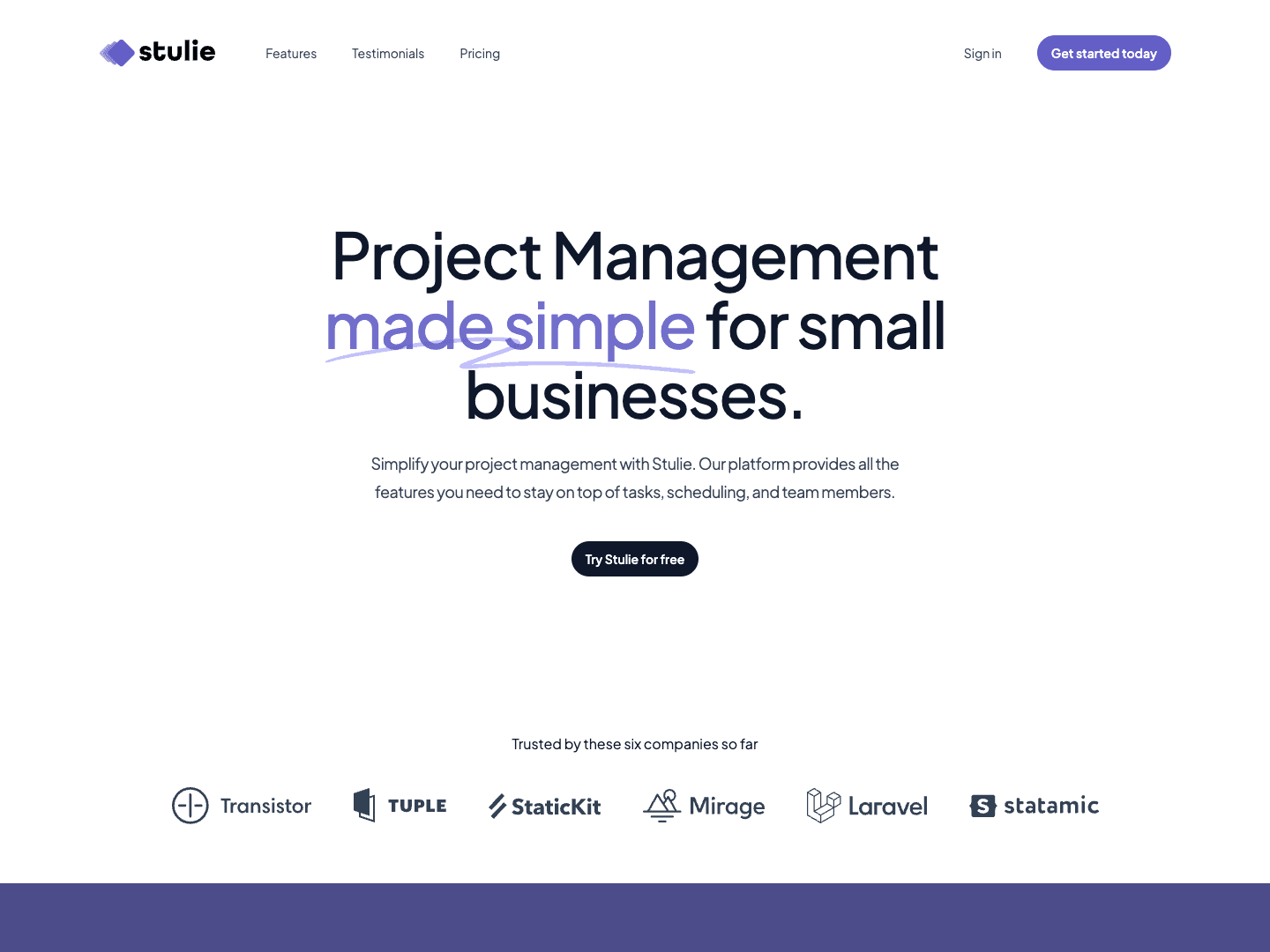
Project Overview:
Stulie is a comprehensive project management system designed primarily for small businesses but adaptable for various teams, including academic groups. It provides a centralized platform offering rich collaborative features focused on enhancing team productivity and project success. Key functionalities include agile sprint management, task assignment with real time notifications (text/email), user based filtering, team invitation/management, and a calendar view for tasks, all within a fully mobile responsive interface.
Goals & Objectives:
The primary objective was to address a specific client need for an intuitive project management board facilitating seamless task assignment and immediate team member notification, ultimately boosting productivity. Key technical goals included: implementing robust real time notifications, ensuring full mobile responsiveness, integrating a payment gateway, simplifying user onboarding, supporting agile methodologies (Sprints), providing flexible task visualization (calendar view, user filtering), and enabling efficient team management (invites, removals).
Approach & Process:
- Requirements & Design (Discovery & Research): Initiated with in depth market analysis and client consultations to identify core requirements and areas for improvement over existing solutions. Defined user needs (personas) and translated them into a concrete development plan, establishing a modern, intuitive design language focused on simplifying project management workflows.
- Development (Design/Development Phase): Built the application using agile development principles. Focused on implementing core features such as task creation/assignment, real time notification systems (text/email), calendar integration, user filtering, and team management functionalities. Ensured the architecture supported scalability and mobile responsiveness.
- Testing & Iteration (Iteration): Conducted user interviews and usability testing throughout the development cycle. Gathered qualitative feedback to iteratively refine the user interface, feature implementation (like task assignment and notifications), and overall workflow based on real world use cases.
- Launch & Maintenance (Launch & Delivery): Executed a seamless deployment to a live environment. Currently manage ongoing hosting and maintenance, monitoring performance and ensuring continued availability and support for its worldwide user base.
Outcome & Impact:
Stulie has been successfully adopted by over 50 distinct teams. User feedback has been overwhelmingly positive, with teams consistently reporting significant improvements in collaboration, task tracking, and overall project management efficiency due to the platform's features and ease of use. The system effectively met its goal of providing a valuable, productivity enhancing tool tailored to the needs of collaborative teams.